Hearings on whether Myanmar committed genocide against the Rohingya opens at top UN court
News > Top Stories


Audio By Carbonatix
12:45 AM on Monday, January 12
By MOLLY QUELL
THE HAGUE, Netherlands (AP) — Myanmar heard accusations that it is responsible for genocide against the Rohingya ethnic minority at the top court of the United Nations, as long-awaited hearings began on Monday.
The West African country of Gambia first filed the case at the International Court of Justice in 2019, arguing a so-called “clearance operation” by Myanmar’s military in 2017 violated the 1948 Genocide Convention.
The Southeast Asian country, which has since been taken over by the military, has denied the allegations.
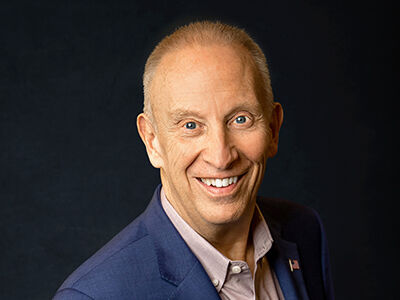
In his opening statements, Gambian Justice Minister Dawda Jallow said his country brought the case out of “a sense of responsibility” after its own experience with a military government. “We must use our moral voice in condemnation of oppression, of crimes against individuals, and of groups, wherever and whenever they occur,” he said, addressing a full courtroom in The Hague.
Jallow then asked about a dozen members of the Rohingya who had made the long journey to the the Great Hall of Justice to stand to be seen by the judges. They rose silently.
Myanmar launched the campaign in Rakhine state in 2017 after an attack by a Rohingya insurgent group. Security forces were accused of mass rapes, killings and torching thousands of homes as more than 700,000 Rohingya fled into neighboring Bangladesh.
Now, some 1.2 million members of this persecuted minority are languishing in chaotic, overcrowded camps, where armed groups recruit children and girls as young as 12 are forced into prostitution. The sudden and severe foreign aid cuts imposed last year by U.S. President Donald Trump shuttered thousands of the camps’ schools and have caused children to starve to death.
“We don't have anything that human beings should have,” Yousuf Ali, who traveled from a refugee camp in Bangladesh to the Netherlands for the proceedings, told The Associated Press ahead of the hearings.
Myanmar was initially represented at the court by Nobel Peace Prize winner Aung San Suu Kyi, who denied her country’s armed forces committed genocide, telling the ICJ in 2019 that the mass exodus of Rohingya people from the country she led was the unfortunate result of a battle with insurgents.
The pro-democracy icon is now in prison after being convicted of what her supporters call trumped-up charges after a military takeover of power.
Myanmar contested the court’s jurisdiction, saying Gambia was not directly involved in the conflict and therefore could not initiate a case. Both countries are signatories to the genocide convention, signed in the wake of World War II, and in 2022, judges rejected the argument, allowing the case to move forward.
The decision opened the door for South Africa to bring a case accusing Israel of genocide. Israel strongly denies the allegation and accuses Pretoria of providing political cover for Palestinian militant group Hamas.
Whatever the court ultimately decides in the Myanmar case will impact the South African case, Juliette McIntyre, an expert on international law at the University of South Australia, told The Associated Press. “The legal test for genocide is very strict but it is possible the judges broaden the definition,” she said.
A finding of genocide would bolster the ongoing investigation and another court based in The Hague, the International Criminal Court. In 2024, the court’s chief prosecutor asked judges to issue an arrest warrant for the head of Myanmar’s military regime Senior Gen. Min Aung Hlaing for crimes against the Rohingya. That request is still pending.