FDA chief's resignation widens a leadership gap at the nation's health department
News > Health News


Audio By Carbonatix
11:30 AM on Wednesday, May 13
By ALI SWENSON, MATTHEW PERRONE and MIKE STOBBE
WASHINGTON (AP) — When the week began, several senior positions at the U.S. Department of Health and Human Services were already sitting empty.
There was no Senate-confirmed U.S. surgeon general. The head of the National Institutes of Health was doubling as the acting head of the U.S. Centers for Disease Control and Prevention. The Food and Drug Administration lacked a permanent vaccine chief after that official was ousted for a second time in a year.
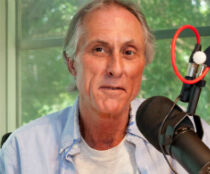
Then on Tuesday Dr. Marty Makary resigned as head of the FDA, leaving another major health agency with only an acting commissioner. Makary's departure widens a leadership gap that has plagued HHS throughout Health Secretary Robert F. Kennedy Jr.’s tenure.
Across a vast and multilayered government, in which many leadership positions must be confirmed by a Senate that shares only a narrow partisan majority with the administration, it’s typical for some roles to remain unfilled or be occupied by interim leaders. But critics say the level of upheaval in the current HHS is unusual and the lack of scientific expertise among its leadership is concerning.
“It's a sign that something is not right in this department,” said Dr. Daniel Jernigan, a former senior employee at the CDC.
Critics say the problem has only been compounded by a raft of cuts and firings and by the broader disruption brought by Kennedy's health policies.
HHS didn't immediately respond to a request for comment Wednesday.
Kathleen Hall Jamieson, director of the Annenberg Public Policy Center at the University of Pennsylvania, said most Americans don’t pay attention to these agencies’ leaders until a public health concern arises — like with the hantavirus outbreak. At moments like this, she said, there are opportunities to build public trust in federal health agencies, which has fallen in recent years.
“The key question for me is, when we need these agencies to speak, will they have the capacity to draw the science together and tell us what we need to know?” Jamieson said.
At the FDA, Makary leaves behind unfinished initiatives and ongoing reviews under scrutiny, including work on ultra-processed foods, food dyes, antidepressants and COVID-19 shots.
Whoever steps into the role on a permanent basis will inherit the same challenge that dogged Makary’s tenure: balancing the anti-regulatory interests of traditional Republicans with the anti-corporate priorities of Kennedy, who is focused on scrutinizing ingredients in food, medicines and vaccines.
The FDA is developing a first-of-its-kind definition of “ultra-processed foods,” which Kennedy blames for elevated rates of diabetes, obesity and other chronic conditions among Americans. That task has fallen to the FDA’s deputy commissioner for foods, Kyle Diamantas, who recently described the effort on ultra-processed foods as “really hard,” at a health conference.
Diamantas was tapped by Trump to lead the FDA on an acting basis. He is also serving as a chief counselor to Kennedy. An attorney and friend of Donald Trump Jr, he is the first person in more than a half-century to head the FDA without a degree in medicine or science.
“Kyle Diamantas now has a nearly impossible charge,” said Dr. Peter Lurie, a former FDA official now at the Center for Science in the Public Interest. “Leading, as a non-scientist, a science-based agency under an unqualified secretary who puts his own medical and nutritional pet peeves over evidence-based public health.”
The Trump administration’s first pick to run the CDC was former Florida Rep. Dr. David Weldon, but his March 2025 Senate confirmation hearing was canceled an hour before it was to begin. Weldon said at the time that he’d been told not enough senators were willing to vote for him.
The White House then moved on to Susan Monarez, who was confirmed by the Senate, but she was ousted in less than a month over disagreements on the administration's agenda. Several key CDC scientific leaders resigned in protest, saying Monarez’s dismissal dashed their hopes that a CDC director would be able to guard against political meddling in the agency’s scientific research and health recommendations.
Since then, multiple HHS officials have been acting director. National Institutes of Health Director Jay Bhattacharya has been overseeing the CDC since February. Last month, Trump nominated Dr. Erica Schwartz, a former deputy surgeon general, to be the next CDC director, a choice the Senate must confirm.
Current and former CDC employees say that there’s been a void in experienced public health leadership at the agency and that Kennedy’s aides have slowed and sometimes choked off its ability to communicate with the public and do the full scope of science-based work it was doing in the past.
HHS officials have said that the CDC’s critical public health functions have remained “intact and effective” and that changes at the agency have been part of an effort “to restore credibility through transparency, gold standard science, and accountability.”
Jernigan, who last August resigned from a senior role at the CDC that has yet to be filled by a permanent replacement, said the leadership shuffle means there hasn't been a “strong, present CDC director” in place to campaign for important agency funding, hiring or retention of skilled scientists.
As the current hantavirus outbreak unfolded, the CDC deployed teams to evacuate and quarantine Americans who may have been exposed, health officials briefed reporters and Bhattacharya went on a Fox News program to urge Americans not to worry. But he got some details wrong and overstated what was known at the time about the outbreak. Jernigan urged the CDC to let more career scientists speak to the public.
“That will do more for trust and for calming the nerves of the U.S. right now,” he said.
Leadership shake-ups come as HHS and the White House have shifted their focus to health initiatives related to diet, lifestyle and affordability in recent months ahead of the midterm elections, publicly veering away from Kennedy’s first-year effort to roll back vaccine guidelines.
While Kennedy boasted about being allowed to pick his own deputies at the beginning of his term, the administration's recent picks signal that the health secretary's close allies may no longer be at the top of the list.
For example, last month, after withdrawing a U.S. surgeon general nominee who was embedded in Kennedy's Make America Healthy Again movement, Trump nominated radiologist and former Fox News personality Dr. Nicole Saphier. She has advocated vaccines more forcefully than Kennedy, and at times she has criticized actions by the current HHS as “embarrassing.” She will need to be confirmed by the Senate.
Still, as the leadership turmoil creates a vacuum within the nation’s health agencies, Kennedy has remained prominent at the top as a voice for them all. That worries Jernigan, who said Kennedy won’t always center the best science in his decisions.
“The driver for the secretary is the ideology,” Jernigan said. “And that’s not a strategy for really improving the health of Americans.”
___
Stobbe and Swenson reported from New York.